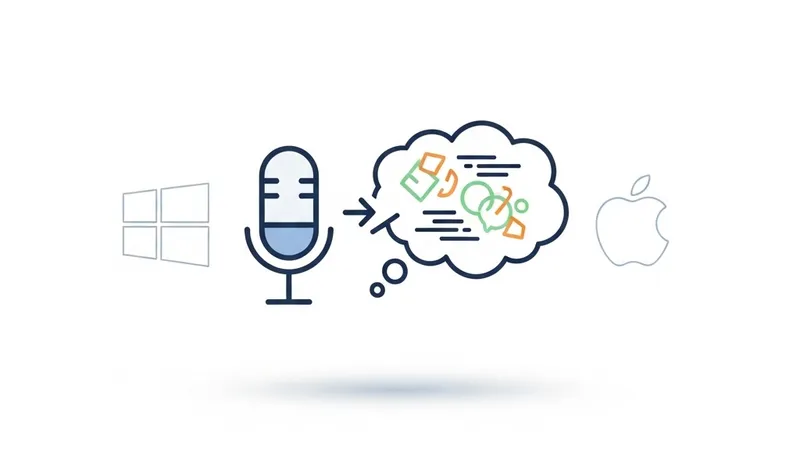
The OpenAI Agents SDK is a lightweight yet powerful Python framework for building multi-agent workflows. It supports OpenAI APIs and over 100 other LLMs, enabling complex agent collaboration and task automation through core concepts like agents, tools, guardrails, and session management. Key features include agents as tools, sandbox execution, human-in-the-loop mechanisms, conversation history management, and built-in tracing, supporting the development of voice agents.
Daytona is a secure, elastic, and open-source infrastructure runtime specifically engineered for AI-generated code execution and AI Agent workflows. At its core, it provides fully isolated sandboxes—composable computers with dedicated kernels, file systems, and network stacks, ensuring robust security and consistency. These sandboxes support multiple languages like Python, TypeScript, and JavaScript, offering sub-90ms startup times and massive parallelization. Developers and AI agents can programmatically manage sandbox lifecycles, file operations, and code execution via comprehensive SDKs, APIs, and a CLI. With stateful environment snapshots enabling persistent operations, Daytona serves as a stable and reliable foundation for sophisticated AI agent architectures.
Omi is an open-source "second brain" application designed to capture screen activity and conversations in real-time, transcribing them and generating summaries and action items. It features an AI chat interface that remembers everything the user has seen and heard, providing context-aware and personalized interactions. The product supports desktop, mobile devices, and wearables, complemented by proprietary hardware.
Nemp Memory is a smart memory plugin designed for AI agents like Claude Code and OpenClaw. It solves the problem of agents forgetting context between sessions by providing automated project environment learning and memory management through simple commands. Key features include 100% local operation, no cloud services, API keys, or complex databases, ensuring privacy with all data stored in plain JSON files. Nemp Memory offers smart context search, AI-powered memory suggestions, and two-way auto-sync with CLAUDE.md, significantly streamlining developer workflows and ensuring agents always have up-to-date and accurate project context.
AI-Search-Hub by minsight-ai-info is an open-source AI Skill designed to aggregate the native search and web extraction capabilities of leading AI platforms like Gemini, Grok, Doubao, Yuanbao, and Kimi. It establishes an efficient, reusable information hub that resolves common data acquisition challenges such as crawler maintenance, platform anti-bot measures, and data cleaning. Users can perform "one query, whole-domain searches" to freely and efficiently gather diverse information, including tech trends, industry sentiment, and data from hard-to-reach sources like WeChat Official Accounts and Douyin. This hub empowers Agents and workflows to leverage major AI platforms' robust understanding and processing power, automating information collection, cleaning, and organization into structured outputs, significantly enhancing data acquisition efficiency and quality.
Claude Code Usage Monitor is a real-time terminal monitoring tool developed by Maciek-roboblog, specifically designed for tracking Claude AI's token usage. It offers advanced analytics, machine learning-based predictions, and a rich user interface to help users monitor token consumption, burn rates, and cost analysis in real-time, while providing intelligent forecasts for session limits. The tool supports automatic detection of various Claude plans and custom limits, along with a multi-level warning system to prevent users from accidentally exceeding their usage quotas.
Chroma is an open-source data infrastructure for AI, specifically designed for building LLM applications. It simplifies vector database operations by automatically handling document tokenization, embedding, and indexing. Users can add, update, delete, and query documents via a simple API, supporting vector, hybrid, and full-text search with flexible filtering options based on metadata and document content. It offers both local deployment and a scalable cloud service, Chroma Cloud.
DeerFlow (Deep Exploration and Efficient Research Flow) is an open-source super agent harness developed by ByteDance, designed to orchestrate sub-agents, memory, and sandboxes to perform a wide range of complex tasks. It is powered by an extensible skills system, allowing for custom functionality integration. DeerFlow 2.0 is a ground-up rewrite, offering enhanced agent capabilities and flexible deployment, recommended for use with large language models such as Doubao-Seed-2.0-Code, DeepSeek v3.2, and Kimi 2.5. It also integrates BytePlus's InfoQuest intelligent search and crawling toolset.
Oh-my-mermaid (omm) is an AI-powered architecture documentation generation tool designed to bridge the gap between AI-written code and human understanding. It analyzes codebases to generate various 'perspectives' (e.g., structure, data flow, integrations), each containing a Mermaid diagram and detailed documentation fields. It recursively analyzes nodes, representing complex components as nested elements reflected in the filesystem. Omm provides an interactive viewer to help developers clearly and intuitively understand their codebase's architecture, and integrates with various AI coding tools like OpenClaw.
caveman, developed by JuliusBrussee, is an agent skill/plugin designed to drastically reduce LLM output tokens by adopting a 'caveman-speak' style, while maintaining full technical accuracy. It cuts approximately 75% of output tokens and increases response speed by about 3x. It also features an input compression tool reducing input tokens by around 46%. The product supports various intensity levels (Lite, Full, Ultra, Wenyan mode) and provides specialized commands for terse commit messages and one-line code reviews.
MemPalace is a local-first AI memory tool designed to store conversation history verbatim and retrieve it through semantic search, without summarizing or paraphrasing. It utilizes a structured index, categorizing information into "wings," "rooms," and "drawers" to enable scoped searches. The retrieval layer is pluggable (ChromaDB by default), ensuring all data remains on the user's machine unless opted out. It achieves an impressive 96.6% R@5 raw recall on the LongMemEval benchmark, notably without requiring LLMs or API calls, showcasing high performance in a local environment.
Magika, developed by Google, is an innovative AI-powered file type detection tool leveraging deep learning for unparalleled accuracy. It uses a highly optimized, compact model (only a few MBs) to swiftly identify file types within milliseconds, even on a single CPU. Trained on a massive dataset of ~100 million samples across 200+ content types, Magika achieves an impressive ~99% average accuracy, excelling particularly with textual formats. Currently deployed at scale within Google for security and content policy routing across Gmail, Drive, and Safe Browsing, Magika also integrates with industry platforms like VirusTotal. Available as a command-line tool, Python API, and JavaScript/Go bindings, it offers robust, efficient, and flexible file identification for diverse applications.
Taskmaster is an AI-driven development task management system designed for seamless integration with any AI chat and code editors like Cursor and VS Code. It generates, plans, and executes development tasks by parsing Product Requirements Documents (PRDs) and leverages capabilities from multiple AI providers (e.g., Anthropic, OpenAI). Supporting Model Control Protocol (MCP) integration, it enables users to run and manage tasks directly within IDEs, offering robust context-aware research capabilities to optimize AI-assisted software development workflows.
Deep-Live-Cam is a real-time AI face swap and video deepfake tool developed by hacksider. It enables users to perform real-time face replacement and deepfake videos with just a single click and a single image. The tool is designed as a productivity asset for the AI-generated media industry, assisting artists in animating custom characters, creating engaging content, and facilitating clothing design. It operates by selecting a source face and a target image/video or camera, then initiating the real-time swap. It supports various platforms and GPU acceleration, and incorporates ethical checks to prevent the processing of inappropriate content.
LangChain is the leading agent engineering platform designed to simplify the development and deployment of applications powered by large language models (LLMs). It provides a robust framework for connecting interoperable components and vast third-party integrations, empowering developers to build sophisticated agents and LLM-driven applications. Key benefits include real-time data augmentation, guaranteed model interoperability, rapid prototyping, and production-ready features. Seamlessly integrated with LangGraph for advanced orchestration and LangSmith for observability, LangChain offers comprehensive end-to-end support for building high-performance, future-proof AI solutions.
Onyx is an open-source AI platform designed as the application layer for Large Language Models (LLMs), offering a feature-rich and easily deployable interface. It empowers LLMs with advanced capabilities such as Agentic RAG, deep research, web search, code execution, and file creation. Onyx supports over 50 indexing-based connectors and provides both Lite and Standard deployment modes. It also offers enterprise-grade features like collaboration, SSO, and RBAC, available in Community (MIT licensed) and Enterprise editions, deployable across various environments like Docker and Kubernetes.
Personal AI Infrastructure (PAI) is a Life Operating System designed to bridge the gap between your current state and your 'Ideal State.' Developed by Daniel Miessler and built for Claude, it features a unified Pulse dashboard, a Digital Assistant (DA) layer, and a proprietary algorithm modeled on the scientific method. PAI prioritizes plain-text transparency and replaces complex RAG with a direct filesystem-as-context approach. With 45+ deterministic skills and 171 workflows, it serves as a personalized AI interface that focuses on magnifying human potential through structured intent.
Firecrawl is a powerful Web Data API engineered for AI Agents, enabling them to access high-quality, clean web data at scale. It boasts industry-leading reliability, covering 96% of the web, including JavaScript-heavy pages, without proxy headaches. With a blazingly fast P95 latency of 3.4 seconds, Firecrawl transforms web content into LLM-friendly formats like clean Markdown, structured JSON, and screenshots, significantly optimizing AI application inputs. It automates complex tasks such as proxy rotation and rate limiting, and empowers AI Agents with advanced interactive capabilities like clicking, scrolling, and typing. An open-source solution, Firecrawl is essential for building robust, intelligent AI applications.
Chat2DB, developed by CodePhiliaX, is an intelligent database tool and versatile SQL client. Deeply integrating AI technology, it offers AI-driven intelligent SQL generation and smart data reporting, significantly boosting data development and analysis efficiency. Featuring an intuitive GUI, Chat2DB broadly supports over 16 mainstream databases like MySQL, Oracle, and PostgreSQL, with a roadmap to 100+ types. Its core functionalities include comprehensive database management, data structure synchronization, data migration, import/export, and code generation, providing an efficient, all-in-one solution for database operations, report generation, and data governance.
LobeHub is a collaborative workspace designed for the co-evolution of humans and AI agents. It treats agents as the fundamental unit of work, allowing users to find, build, and coordinate agent teammates. Key highlights include the integration of the Model Context Protocol (MCP) for seamless tool connectivity, a library of over 10,000 skills, and structured, editable 'white-box' memory. LobeHub supports multi-model services, visual recognition, and complex workflows like projects and workspaces, providing a highly customizable and open-source environment for AI productivity.
Kiro, by Amazon, is an innovative AI Agent-driven Integrated Development Environment (IDE) and Command-Line Interface (CLI) designed to streamline the entire development lifecycle, from prototype to production. It empowers developers with AI-powered features such as structured specifications (Specs), intelligent automation Hooks, and natural language coding assistance. Kiro deeply understands your codebase, translating natural language prompts into detailed implementation plans. It supports spec-driven development, offers project context awareness, extensible Agent Powers, and connects external tools via the Model Context Protocol (MCP). Kiro helps teams enhance development efficiency, automate repetitive tasks, and ensures enterprise-grade code security and privacy, integrating seamlessly into existing workflows.
daily_stock_analysis, developed by ZhuLinsen, is an intelligent stock analysis system powered by large AI models. It automatically analyzes selected A-share, Hong Kong, and US stocks daily, generating a 'Decision Dashboard' with core conclusions, ratings, buy/sell points, risk alerts, and action checklists. The system supports automated delivery of analysis reports via multiple channels including WeChat Work, Feishu, Telegram, Discord, Slack, and email. It integrates multi-dimensional analysis (technical, real-time quotes, chip distribution, news sentiment), supports global markets, and incorporates various built-in market strategies (e.g., moving averages, 'Chan Lun', Elliott Wave). Users can also utilize a web-based workbench for manual analysis, configuration management, historical report viewing, backtesting, and AI Agent-powered strategy inquiries.
The official repository for the book 'Build a Large Language Model (From Scratch)' by Sebastian Raschka. It provides a comprehensive, step-by-step guide to developing, pretraining, and finetuning a GPT-like LLM from the ground up. By using pure PyTorch instead of high-level LLM libraries, it explains the inner workings of components like attention mechanisms and transformer blocks. The project includes end-to-end pipelines for pretraining on unlabeled data and finetuning for instruction-following, designed to be accessible on standard consumer hardware.
prompts.chat is the world's largest open-source AI prompt library, offering a curated collection of prompt examples for various AI chat models like ChatGPT, Claude, Gemini, and more. It provides an online platform for browsing and contributing prompts, along with interactive learning resources for prompt engineering and a game-based adventure for kids. The platform also supports self-hosting and various integrations including a CLI and Claude Code Plugin.
"system-prompts-and-models-of-ai-tools" is an actively maintained open-source GitHub repository by x1xhlol, curating and showcasing system prompts, internal tool definitions, and AI model configurations from over 30 prominent AI tools like Cursor and Devin AI. This project offers developers invaluable insights into how commercial AI agents operate under the hood, serving as a critical resource for understanding AI system behaviors and comparing different tools. It also highlights significant AI security concerns, warning AI startups about prompt exposure and injection risks, and recommending services like ZeroLeaks.ai for security audits. The repository has been actively collecting data since early 2025 and receives continuous updates.
System Prompts Leaks is an open-source project that collects and curates system prompts, system messages, and developer instructions extracted from various popular AI chatbots and coding assistants, including ChatGPT, Claude, Gemini, Grok, Perplexity, and Meta AI. The project is regularly updated to incorporate new models and versions, serving as a centralized resource for researchers, developers, and enthusiasts. It aims to provide insights into the underlying operational mechanisms and predefined behaviors of different AI models, allowing users to understand their personalities, functionalities, and response logic across various scenarios.
Video-subtitle-remover (VSR) is an open-source AI-powered tool designed to remove hardcoded subtitles from videos without losing resolution. It utilizes advanced inpainting algorithms like STTN, LAMA, and PROPAINTER to detect text and seamlessly fill the erased areas. It supports automatic full-video removal, custom coordinate targeting, batch image watermark removal, and multiple hardware accelerations.
Archon is the first open-source harness builder and workflow engine for AI coding, designed to make AI coding deterministic and repeatable. It allows developers to define their entire development processes—including planning, implementation, validation, code review, and PR creation—as YAML workflows. This ensures reliable and consistent execution across projects, preventing the randomness often seen in AI agent outputs. By encoding the development process with defined phases and validation gates, Archon provides a structured framework where AI intelligently fills in each step, akin to how Dockerfiles brought determinism to infrastructure or GitHub Actions to CI/CD.
CocoIndex is an open-source incremental indexing framework designed to provide continuously fresh context for AI agents and LLM applications. It processes enterprise data sources like codebases, meeting notes, and Slack messages through an incremental sync engine, only reprocessing the changes (Δ). This ensures AI agents always have up-to-date and reliable information for effective reasoning, eliminating stale context issues.
mcp-use is a fullstack MCP framework designed to build interactive MCP Apps and Servers for AI Agents like ChatGPT and Claude. It provides TypeScript and Python SDKs, enabling developers to create 'write once, run everywhere' UI widgets. The ecosystem includes an integrated MCP Inspector for debugging and Manufact MCP Cloud for production deployment with full observability, metrics, and logs, simplifying the creation of interactive AI components.
AI Berkshire is a value investing research framework compatible with Claude Code and Codex. It systematizes the methodologies of investment masters Warren Buffett, Charlie Munger, Duan Yongping, and Li Lu. The framework features 18 specialized skills covering deep research, earnings review, industry screening, and portfolio management. By running 4 parallel AI agents to challenge each other and utilizing Python-based financial verification, AI Berkshire delivers structured, unbiased, and actionable investment reports with explicit price zones rather than ambiguous analysis.
JeecgBoot is an enterprise-grade AI low-code platform built on SpringBoot 3 and Vue 3. It features a unique 'Low-code + No-code' dual-mode architecture. With its 'AI Skills' natural language programming capability, users can generate full-stack code, BPMN flows, and dashboards via simple prompts. The platform integrates an AI application management system similar to Dify, supporting RAG, knowledge bases, and multi-LLM integration (DeepSeek, ChatGPT, etc.). It provides robust security, multi-tenancy, and high-performance visualization tools.
Desktop Commander MCP is a versatile Model Context Protocol (MCP) server that integrates professional development tools into AI interfaces. It empowers AI to manage files, execute long-running terminal commands, and handle background processes. Key features include deep support for Excel/PDF/DOCX, in-memory code execution (Python, Node.js, R), and visual file previews. Built with security in mind, it offers Docker isolation and remote control capabilities, transforming standard AI interactions into a comprehensive, automated local development environment.
All API Hub is a comprehensive AI asset management browser extension. It provides a centralized platform to manage multiple AI proxy accounts compatible with architectures like New API and One API. Key features include a unified dashboard for balance/usage tracking, intelligent model price comparison, automated check-ins, and secure API key management. It allows seamless integration by exporting configurations to tools like CherryStudio. Prioritizing privacy, it stores all data locally and supports encrypted backups via WebDAV.
Ralph Orchestrator is a hat-based orchestration framework designed for autonomous AI agent task completion. Implementing the Ralph Wiggum technique, it keeps agents in an iterative loop until a task is finalized. It supports multiple backends (Claude Code, Gemini, etc.) and features specialized persona roles ('Hats'), backpressure gates for quality control (tests/linting), and a human-in-the-loop mechanism via Telegram. It includes a web dashboard and works as an MCP server.
OpenSquilla is a token-efficient, microkernel AI agent designed for CLI, Web UI, and chat channels. At its core, an on-device model router (SquillaRouter) dynamically dispatches tasks to the cheapest compatible LLM (supporting over 20 providers like DeepSeek, Anthropic, OpenAI). Featuring persistent memory, a layered sandbox, web search, and local embeddings, it delivers identical tool dispatch, retries, and decision logging across all interfaces, maximizing efficiency within your budget.
fireworks-tech-graph is a professional diagram generation tool that converts natural language descriptions into publication-ready SVG and PNG diagrams. Designed for the AI/Agent ecosystem, it supports 14 UML types and specialized domain patterns like RAG, Multi-Agent orchestration, and Mem0 architectures. It features 7 pre-encoded visual styles (e.g., Claude/OpenAI aesthetics, Blueprint, Glassmorphism) and provides high-fidelity 1920px PNG exports. As a Claude Code Skill, it enables developers to visualize complex systems instantly without manual drawing or DSL syntax.
Claude Code Guide by zebbern is a comprehensive, community-driven resource hub for Anthropic's Claude Code. It provides extensive documentation covering native installations, configurations, and advanced functionalities like MCP (Model Context Protocol) integrations, sub-agent orchestration, and automation tasks. Featuring a massive repository of over 954 Agent Skills, Mermaid templates, and third-party integrations (e.g., Discord, DeepSeek), it empowers developers to master AI-assisted coding workflows and seamlessly transition from beginners to power users.
Peekaboo is a macOS GUI automation tool that combines high-fidelity screen capture and AI analysis to execute natural language-driven agent flows. It operates as both a native CLI and an MCP server, offering pixel-accurate captures, direct accessibility element interactions, and seamless multi-provider AI integration.
TrendRadar is a lightweight, open-source hotspot assistant designed for rapid deployment. It aggregates real-time news via RSS and APIs, using AI for intelligent filtering based on natural language interests, automated translation, and trend summarization. It supports one-click notifications to over 9 platforms, including WeChat, Lark, and Telegram. With deep MCP (Model Context Protocol) integration, it enables AI agents to access and analyze live news data seamlessly, offering a professional HTML reporting interface and cross-platform notification adaptations.
Voicebox is a local-first, open-source AI voice studio by jamiepine, offering a private alternative to ElevenLabs and WisprFlow. It features high-fidelity voice cloning, speech generation across 23 languages via 7 different engines (like Qwen3-TTS and Kokoro), and global dictation via STT. With its native MCP server, it enables AI agents such as Claude and Cursor to speak using custom-cloned voices, ensuring all voice data and models remain securely on the user's local machine.
agentmemory provides persistent memory for AI coding agents including OpenClaw, Cursor, and Claude Code. Built on the iii engine, it captures agent activities and compresses them into searchable memories using hybrid search and knowledge graphs. It eliminates the need for repeated context setting across sessions. By utilizing local embeddings with zero external database dependencies, it achieves 95.2% retrieval accuracy while reducing token costs by over 92%, enabling agents to 'remember' across different platforms and sessions.
Write HTML. Render video. Built for agents.
Honcho by plastic-labs is an innovative open-source memory library and managed service, purpose-built for developing stateful AI agents. It offers unparalleled compatibility across models, frameworks, and architectures, enabling agents to build and persistently maintain dynamic state for users, other agents, groups, and more. As a continual learning system, Honcho intelligently adapts to evolving entities over time, significantly boosting agent retention and user trust. Its core capabilities include robust application workflow management, comprehensive interaction history storage, and advanced reasoning to guide agent behavior. With intuitive natural language querying, sophisticated session context management, and efficient message search, Honcho empowers developers to create highly intelligent chatbots and deliver deeply personalized agent experiences.
Dify is an open-source, production-ready LLM application development platform engineered to significantly accelerate the entire development cycle from prototype to production. It offers an intuitive visual workflow canvas, integrating a powerful Retrieval Augmented Generation (RAG) pipeline for efficient document ingestion and retrieval. Dify also features advanced agent capabilities based on LLM Function Calling or ReAct, configurable with pre-built or custom tools. It provides comprehensive support for hundreds of mainstream proprietary and open-source LLMs, a robust Prompt IDE for prompt engineering and model performance comparison, and built-in observability features (e.g., Opik, Langfuse, Arize Phoenix). This empowers developers to rapidly build, deploy, and monitor complex AI applications and agents.
Rowboat is an open-source, local-first AI coworker designed to transform daily work content, such as emails and meeting notes, into a persistent knowledge graph. It securely stores all data in Markdown format on the user's local machine, ensuring privacy and data control. By accumulating context and understanding relevance, Rowboat efficiently drafts emails, prepares for meetings, and generates documents and presentations (including PDFs). It also features "live notes" to track specific people, companies, or topics. Rowboat supports various AI models (local and hosted) and external tool integrations via the Model Context Protocol (MCP), enabling advanced workflow automation.
MoneyPrinterTurbo is an end-to-end automated short video generator. By simply providing a keyword or theme, the tool automatically generates scripts, sources high-quality footage, synthesizes voiceovers, adds subtitles, and mixes background music. Built with an MVC architecture, it offers both a Web UI and API support. It integrates with major LLMs like OpenAI and DeepSeek, supports various video dimensions (9:16/16:9), and utilizes copyright-free materials. It's designed for creators to batch-produce content via local or Docker deployment.
awesome-mcp-servers is a curated list of Model Context Protocol (MCP) servers maintained by punkpeye. It aggregates production-ready and experimental MCP servers that allow AI models to securely interact with local and remote resources. With a synchronized web directory on glama.ai, it helps developers easily discover, filter, and integrate standardized tools like databases, APIs, and file systems into their AI applications.
AI Website Cloner Template by JCodesMore is a reusable template to reverse-engineer any website into a clean, modern Next.js codebase using AI coding agents. Powered by a `/clone-website` command, it runs a multi-phase pipeline: recon and asset extraction, component spec drafting, parallel builder dispatching in git worktrees, and final assembly with visual QA. Perfect for platform migration, recovering lost source code, or rapid prototyping.
whichllm is a CLI tool that auto-detects your hardware to recommend the best HuggingFace LLMs that actually fit and run efficiently. Rather than just finding the largest model that fits in VRAM, it intelligently ranks models using real benchmark scores, quantization penalties, and estimated inference speed. It also features GPU simulation, reverse hardware planning, one-command chat execution, and Python snippet generation.
Agent-Native is an open-source framework by Builder.io for building robust, agent-native applications where AI agents operate directly inside real apps rather than just chatting alongside them. It provides essential primitives for production-grade agentic software, including shared actions (write once, use across UI, Agent, MCP, and CLI), SQL-backed state, and UI synchronization. The framework ensures deep integration between AI and UI, enabling real-time multiplayer collaboration, context-aware assistance, and self-improving interfaces.
A collection of agent skills for Google products and technologies, including Google Cloud, enabling AI agent developers to easily integrate and build intelligent applications.
Community-contributed collection of custom agents, instructions, skills, and plugins to supercharge GitHub Copilot for AI agent developers.
Production-grade engineering skills for AI coding agents, encoding workflows, quality gates, and best practices for software development.