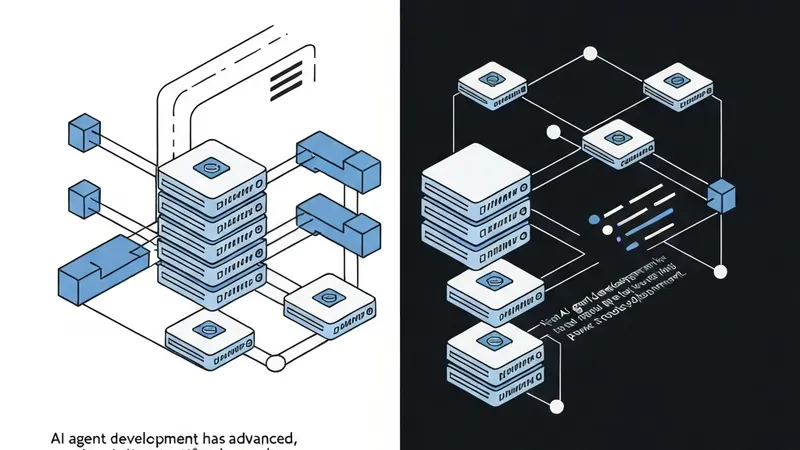
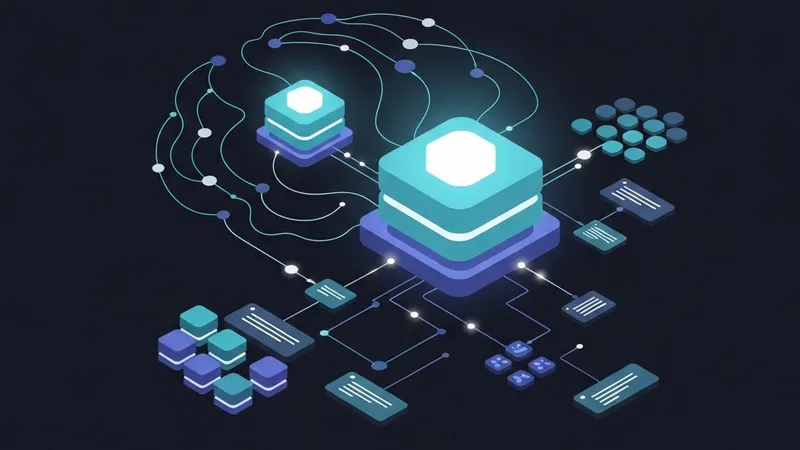
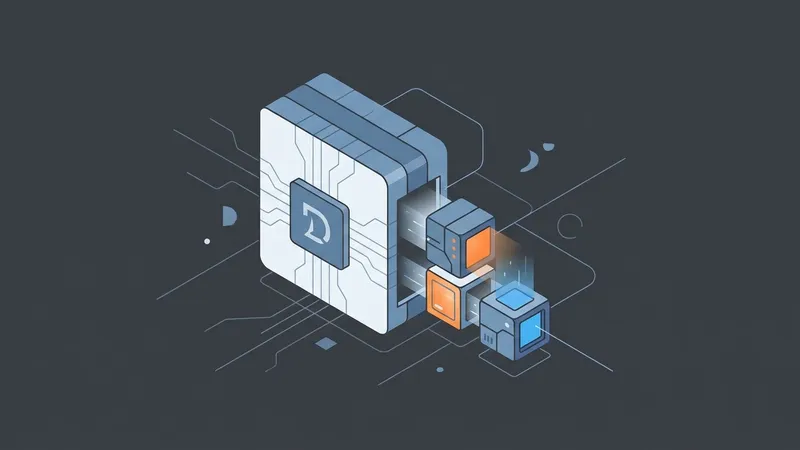
Daytona is a secure, elastic, and open-source infrastructure runtime specifically engineered for AI-generated code execution and AI Agent workflows. At its core, it provides fully isolated sandboxes—composable computers with dedicated kernels, file systems, and network stacks, ensuring robust security and consistency. These sandboxes support multiple languages like Python, TypeScript, and JavaScript, offering sub-90ms startup times and massive parallelization. Developers and AI agents can programmatically manage sandbox lifecycles, file operations, and code execution via comprehensive SDKs, APIs, and a CLI. With stateful environment snapshots enabling persistent operations, Daytona serves as a stable and reliable foundation for sophisticated AI agent architectures.
Nemp Memory is a smart memory plugin designed for AI agents like Claude Code and OpenClaw. It solves the problem of agents forgetting context between sessions by providing automated project environment learning and memory management through simple commands. Key features include 100% local operation, no cloud services, API keys, or complex databases, ensuring privacy with all data stored in plain JSON files. Nemp Memory offers smart context search, AI-powered memory suggestions, and two-way auto-sync with CLAUDE.md, significantly streamlining developer workflows and ensuring agents always have up-to-date and accurate project context.
OpenCLI is an innovative AI-native runtime and universal CLI hub that transforms websites, browser sessions, Electron apps, and local tools into standardized, deterministic command-line interfaces. It offers a powerful automation platform for both human users and AI agents. With over 90 pre-built adapters, users can access data from popular sites like Bilibili. AI agents can leverage `opencli browser` for real-time direct browser control, or automatically generate new CLI adapters from website behavior using functions like `explore` and `generate`. OpenCLI also supports driving Electron applications and serves as a central hub for local CLI tools such as `gh` and `docker`. Key benefits include ensuring deterministic output, secure account access by reusing browser login states, and zero LLM token consumption during runtime, all while empowering AI agents with seamless tool discovery and execution.
Chroma is an open-source data infrastructure for AI, specifically designed for building LLM applications. It simplifies vector database operations by automatically handling document tokenization, embedding, and indexing. Users can add, update, delete, and query documents via a simple API, supporting vector, hybrid, and full-text search with flexible filtering options based on metadata and document content. It offers both local deployment and a scalable cloud service, Chroma Cloud.
DeerFlow (Deep Exploration and Efficient Research Flow) is an open-source super agent harness developed by ByteDance, designed to orchestrate sub-agents, memory, and sandboxes to perform a wide range of complex tasks. It is powered by an extensible skills system, allowing for custom functionality integration. DeerFlow 2.0 is a ground-up rewrite, offering enhanced agent capabilities and flexible deployment, recommended for use with large language models such as Doubao-Seed-2.0-Code, DeepSeek v3.2, and Kimi 2.5. It also integrates BytePlus's InfoQuest intelligent search and crawling toolset.
Browser-Use is a powerful AI-driven browser automation tool that enables users to automate web interactions, data extraction, and complex tasks via natural language or Python code. It offers an open-source agent for local deployment and a more robust cloud agent service, featuring stealth browsing, proxy rotation, and advanced integrations to significantly enhance automation efficiency and accuracy.
Everything Claude Code is a performance optimization system for AI agent harnesses, developed by an Anthropic hackathon winner. It offers a complete agent ecosystem including production-ready skills, instincts, memory optimization, continuous learning, security scanning, and research-first development. The system supports various major AI agent harnesses like Claude Code, Codex, Cursor, OpenCode, and Gemini, and has been iterated and validated through over 10 months of intensive daily use. It features a Tkinter-based desktop dashboard and supports multi-language rules and agents.
LangChain is the leading agent engineering platform designed to simplify the development and deployment of applications powered by large language models (LLMs). It provides a robust framework for connecting interoperable components and vast third-party integrations, empowering developers to build sophisticated agents and LLM-driven applications. Key benefits include real-time data augmentation, guaranteed model interoperability, rapid prototyping, and production-ready features. Seamlessly integrated with LangGraph for advanced orchestration and LangSmith for observability, LangChain offers comprehensive end-to-end support for building high-performance, future-proof AI solutions.
TuriX-CUA by TurixAI is an AI-driven desktop automation agent that enables powerful AI models to perform real, hands-on actions directly on your desktop. It features a state-of-the-art computer-use agent (CUA), achieving an 80% success rate on OSWorld-style Mac benchmarks. TuriX is 100% open-source and free for personal and research use, allowing users to swap in their own models. The latest TuriX SuperPower combines CUA and CLI workflows for everyday office and coding automation, facilitating a continuous flow between GUI actions and CLI precision.
Firecrawl is a powerful Web Data API engineered for AI Agents, enabling them to access high-quality, clean web data at scale. It boasts industry-leading reliability, covering 96% of the web, including JavaScript-heavy pages, without proxy headaches. With a blazingly fast P95 latency of 3.4 seconds, Firecrawl transforms web content into LLM-friendly formats like clean Markdown, structured JSON, and screenshots, significantly optimizing AI application inputs. It automates complex tasks such as proxy rotation and rate limiting, and empowers AI Agents with advanced interactive capabilities like clicking, scrolling, and typing. An open-source solution, Firecrawl is essential for building robust, intelligent AI applications.
GitNexus is an innovative zero-server code intelligence engine designed to significantly enhance AI agents' code understanding and analysis capabilities. It indexes any codebase into a detailed knowledge graph, exposing deep structural information such as dependencies, call chains, module clusters, and execution flows. Leveraging its core local CLI and Multi-Protocol Communication (MCP) framework, GitNexus provides mainstream AI agents like Cursor, Claude Code, and Codex with an unparalleled architectural view and rich context, boosting their reliability and accuracy in code exploration, debugging, refactoring, and generation tasks. A convenient browser Web UI is also available for quick exploration, alongside enterprise SaaS and self-hosted deployment options.
The Agency (agency-agents) is an open-source project by msitarzewski, offering a collection of meticulously crafted AI agent personalities designed to optimize workflows as specialized AI experts. Each agent possesses deep domain expertise (e.g., frontend development, backend architecture, UX research, PPC strategy), a unique personality, defined processes, and measurable deliverables. Far from generic prompt templates, these are production-ready solutions that integrate seamlessly with various development tools like Claude Code, Gemini CLI, and OpenClaw, enabling users to efficiently automate tasks as if having a dedicated, always-on AI specialist team.
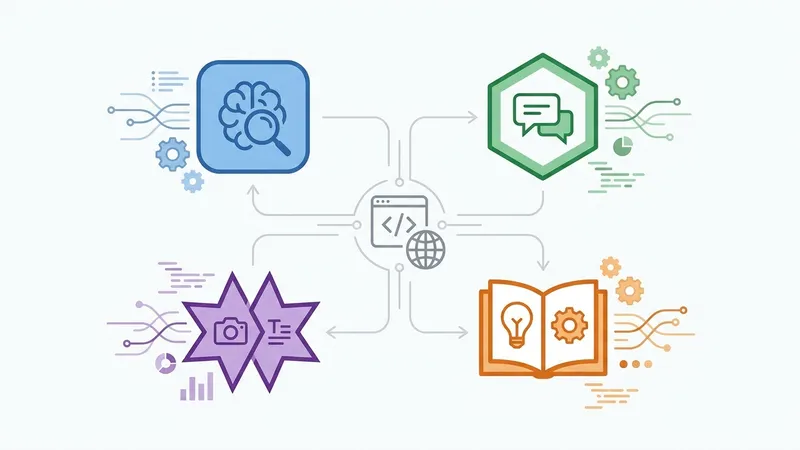
DeepTutor, developed by HKUDS, is an agent-native personalized intelligent tutoring platform. It integrates various AI agent modes like problem-solving, quiz generation, and deep research within a unified chat workspace. Key features include an AI Co-Writer for collaborative content creation, a Book Engine to transform materials into interactive "living books," and a Knowledge Hub for RAG-powered learning, all supported by persistent memory for evolving personalized guidance.
CocoIndex is an open-source incremental indexing framework designed to provide continuously fresh context for AI agents and LLM applications. It processes enterprise data sources like codebases, meeting notes, and Slack messages through an incremental sync engine, only reprocessing the changes (Δ). This ensures AI agents always have up-to-date and reliable information for effective reasoning, eliminating stale context issues.
Nanobot is an open-source, lightweight MCP host developed by the community, designed to simplify the creation of intelligent agents powered by the Model Context Protocol (MCP). It offers flexible deployment and seamless integration, enabling users to easily connect large language models like OpenAI and Anthropic with various MCP servers through intuitive configurations. Developers can swiftly build and manage AI agent applications supporting multi-modal interactions such as chat and voice. By providing a fully MCP-compliant platform, Nanobot significantly lowers the technical barrier for AI agent development, accelerating the innovation and deployment of sophisticated AI solutions.
Ralph Orchestrator is a hat-based orchestration framework designed for autonomous AI agent task completion. Implementing the Ralph Wiggum technique, it keeps agents in an iterative loop until a task is finalized. It supports multiple backends (Claude Code, Gemini, etc.) and features specialized persona roles ('Hats'), backpressure gates for quality control (tests/linting), and a human-in-the-loop mechanism via Telegram. It includes a web dashboard and works as an MCP server.
OpenSquilla is a token-efficient, microkernel AI agent designed for CLI, Web UI, and chat channels. At its core, an on-device model router (SquillaRouter) dynamically dispatches tasks to the cheapest compatible LLM (supporting over 20 providers like DeepSeek, Anthropic, OpenAI). Featuring persistent memory, a layered sandbox, web search, and local embeddings, it delivers identical tool dispatch, retries, and decision logging across all interfaces, maximizing efficiency within your budget.
Edict is an OpenClaw-based multi-agent collaboration architecture inspired by the ancient Chinese 'Three Departments and Six Ministries' system. It utilizes 12 specialized agents with strict role-based authorization. Unlike traditional frameworks, Edict features a mandatory institutional review mechanism that can reject unqualified outputs, preventing errors from executing. It includes a real-time Kanban dashboard providing full observability, allowing users to manually intervene in tasks, hot-switch LLM models, and review complete audit logs to eliminate the black-box nature of AI workflows.
9Router is a specialized AI router and token saver for coding agents like OpenClaw and Claude Code. Featuring the RTK Token Saver, it auto-compresses tool results to reduce token usage by 20-40%. It implements a smart three-tier fallback system: prioritizing subscriptions, moving to cheap APIs, and finally to free models. 9Router also provides seamless protocol translation between OpenAI and Claude, multi-account round-robin, and real-time quota tracking, ensuring an uninterrupted and cost-effective AI-powered development experience.
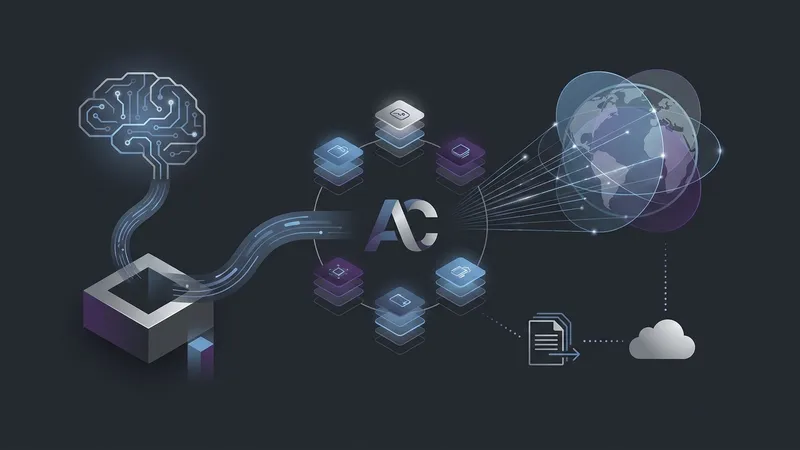
Agent S, developed by Simular AI, is an open-source framework enabling autonomous computer interaction via an Agent-Computer Interface (ACI). By pairing major LLMs with visual grounding models like UI-TARS, it translates natural language into precise mouse and keyboard actions. The latest Agent S3 features a local coding environment for Python/Bash execution and Behavior Best-of-N mechanisms. It demonstrates strong zero-shot generalization across platforms and is the first GUI agent to surpass human-level performance (72.60%) on the OSWorld benchmark.
This is an unofficial Chinese localized guide for Claude Code, forked and rewritten from the upstream project 'luongnv89/claude-howto'. It aims to help Chinese users progress from basic operations to mastering advanced Claude Code features, such as the combined use of slash commands, memory, skills, hooks, MCP, subagents, and plugins. The guide rephrases explanations, addresses common obstacles for Chinese users, and preserves key executable identifiers to ensure compatibility, providing a practical learning path for Claude Code.
Obscura is a high-performance headless browser engine built in Rust, optimized for AI agents and web scraping. It embeds the V8 engine directly and supports the Chrome DevTools Protocol (CDP), serving as a drop-in replacement for Puppeteer and Playwright. It features a minimal footprint (~30MB memory), built-in stealth mode for anti-fingerprinting, and native Model Context Protocol (MCP) support, enabling seamless integration into AI agent ecosystems like Claude and Cursor for automated browsing tasks.
gstack is an open-source software factory developed by Garry Tan, President & CEO of Y Combinator, leveraging the OpenClaw ecosystem. It transforms Claude Code into a virtual engineering team, offering 23 specialist roles and 8 powerful tools accessible via slash commands. Designed to streamline the entire software development lifecycle—from ideation and planning to building, reviewing, testing, and shipping—gstack significantly boosts individual developer productivity. It supports integration with various AI coding agents, making it an essential tool for technical founders, new AI users, and tech leads aiming for rapid, high-quality product delivery.
Khazix Skills is an open-source collection of AI skills and prompts developed by 'Digital Life Khazix' to enhance the utility and efficiency of AI agents. It includes structured skill instruction sets, compliant with the Agent Skills open standard, readily loadable by agents such as Claude Code, Codex, and OpenClaw. Additionally, it offers copy-paste prompts compatible with leading conversational models like ChatGPT, Claude, and Gemini. The collection provides practical functionalities such as automated document synchronization, in-depth research report generation, personalized writing styles, and AI hot news inquiry.
MiniCC is an educational AI Agent project designed to help developers understand and replicate the architecture of Claude Code through hands-on Python implementation. It distills complex Rust-based SOTA harness engineering into 19 progressive tutorials and 13 core modules. Covering essential concepts like agentic loops, permission systems, and auto-compaction, it enables users to build a functional, Claude Code-inspired AI Agent from scratch.
abtop is a terminal user interface (TUI) tool designed for monitoring AI coding agents like Claude Code and Codex CLI. It provides real-time insights into agent sessions, displaying metrics such as token usage, context window percentage, rate limits, child processes, and open ports. It discovers sessions from local process and file states, supports multiple active profiles, and operates in a read-only manner without requiring API keys or authentication.
CloakBrowser is a stealth Chromium distribution modified at the C++ source level by CloakHQ. Instead of relying on fragile JS injections, it patches fingerprints (Canvas, WebGL, WebRTC, etc.) directly in the binary to bypass bot detection like Cloudflare Turnstile and reCAPTCHA v3. It features a unique 'humanize' mode for realistic behavioral simulation and serves as a drop-in replacement for Playwright and Puppeteer. It is an essential stealth environment for AI agents and automation frameworks requiring high-trust browser sessions.
Octogent is an open-source orchestration dashboard built for Claude Code. It addresses the chaos of running multiple terminal agents by introducing 'tentacles'—scoped job containers providing each AI session with its own durable context and a todo.md task list. Instead of relying on a broad chat history, agents work within these isolated file environments. The tool features a local API and web UI enabling developers to coordinate parallel coding sessions. Furthermore, it allows primary Claude Code agents to spawn child agents from task lists and supports inter-agent messaging.
Honcho by plastic-labs is an innovative open-source memory library and managed service, purpose-built for developing stateful AI agents. It offers unparalleled compatibility across models, frameworks, and architectures, enabling agents to build and persistently maintain dynamic state for users, other agents, groups, and more. As a continual learning system, Honcho intelligently adapts to evolving entities over time, significantly boosting agent retention and user trust. Its core capabilities include robust application workflow management, comprehensive interaction history storage, and advanced reasoning to guide agent behavior. With intuitive natural language querying, sophisticated session context management, and efficient message search, Honcho empowers developers to create highly intelligent chatbots and deliver deeply personalized agent experiences.
Open Design is the open-source, local-first alternative to Claude Design. It transforms 16 auto-detected coding-agent CLIs on your machine (or an OpenAI-compatible BYOK proxy) into a powerful design engine. Driven by 137 composable skills and 150 brand-grade design systems, its local daemon builds a real on-disk project folder for the agent. The agent then follows strict pre-flight checklists and self-critiques to emit UI artifacts rendered in a sandboxed iframe. It fully supports multi-modal media generation, ensuring a vendor lock-in free, professional-grade design workflow.
NocoBase is an open-source AI and no-code platform designed to build robust business systems quickly. It effectively combines production-proven infrastructure with a WYSIWYG visual interface. Coding agents like OpenClaw and Cursor can collaborate with users via a full CLI and specialized skills. Furthermore, built-in AI employees seamlessly integrate into internal workflows to execute tasks within fine-grained permission boundaries. Driven by a microkernel plugin architecture, it ensures a highly reliable and self-hosted environment.
Open Multi-Agent is a lightweight, TypeScript-native multi-agent orchestration framework. By simply providing a goal, its built-in coordinator automatically decomposes the goal into a task DAG, parallelizes independent steps, and synthesizes the final output. With only 3 runtime dependencies, it seamlessly drops into any Node.js backend. Key features include mixing over 12 LLM providers within a single team, a sandboxed filesystem workspace, pluggable shared memory, and native integration with the Model Context Protocol (MCP) for tool extensibility.
Rowboat is an open-source, local-first AI coworker designed to transform daily work content, such as emails and meeting notes, into a persistent knowledge graph. It securely stores all data in Markdown format on the user's local machine, ensuring privacy and data control. By accumulating context and understanding relevance, Rowboat efficiently drafts emails, prepares for meetings, and generates documents and presentations (including PDFs). It also features "live notes" to track specific people, companies, or topics. Rowboat supports various AI models (local and hosted) and external tool integrations via the Model Context Protocol (MCP), enabling advanced workflow automation.
AI Website Cloner Template by JCodesMore is a reusable template to reverse-engineer any website into a clean, modern Next.js codebase using AI coding agents. Powered by a `/clone-website` command, it runs a multi-phase pipeline: recon and asset extraction, component spec drafting, parallel builder dispatching in git worktrees, and final assembly with visual QA. Perfect for platform migration, recovering lost source code, or rapid prototyping.
html-anything is a local-first, agentic HTML editor built for the AI era. Instead of writing Markdown, it leverages your existing local AI coding agents (like Claude Code, Cursor, and 6 others) with zero extra API keys required. It instantly transforms raw inputs into production-ready, beautifully designed single-file HTML. Driven by 75 composable skill templates across multiple deliverable surfaces—including editorial decks, social cards, posters, and web prototypes—it ensures the generated artifact is publication-ready. Features include one-click export to WeChat, X, Zhihu, or download as HTML/PNG.
PentAGI is an open-source, autonomous penetration testing AI agent platform developed by vxcontrol. Utilizing a multi-agent orchestration architecture, it automates security testing within isolated Docker sandboxes. It integrates over 20 professional security tools (e.g., nmap, Metasploit, sqlmap) and leverages Neo4j-based knowledge graphs (Graphiti) alongside pgvector for persistent semantic memory. Supporting over 10 LLM providers, PentAGI provides detailed vulnerability reports, comprehensive monitoring, and web intelligence integration.
Installable GitHub library of 1,372+ agentic skills for Claude Code, Cursor, Codex CLI, Gemini CLI, Antigravity, and other AI coding assistants.
A curated collection of official and community-built AI agent skills, compatible with Claude, Gemini, Cursor, and more, helping developers integrate high-quality tools.
A catalog of instructions, scripts, and resources that AI agents can discover and use to perform specific tasks, enabling reusable capabilities.
Official collection of skills for Claude, providing document processing, coding, and creative capabilities for AI agents.
An agentic skills framework and methodology for coding agents, supporting TDD and sub-agent driven development across multiple platforms.
A registry for AI assets like MCP servers and prompts, enabling agents to search and install skills.
A structured collection of 100+ ready-to-use Claude Skills for AI agents, development, and research, with MCP server support.