caveman, developed by JuliusBrussee, is an agent skill/plugin designed to drastically reduce LLM output tokens by adopting a 'caveman-speak' style, while maintaining full technical accuracy. It cuts approximately 75% of output tokens and increases response speed by about 3x. It also features an input compression tool reducing input tokens by around 46%. The product supports various intensity levels (Lite, Full, Ultra, Wenyan mode) and provides specialized commands for terse commit messages and one-line code reviews.
Everything Claude Code is a performance optimization system for AI agent harnesses, developed by an Anthropic hackathon winner. It offers a complete agent ecosystem including production-ready skills, instincts, memory optimization, continuous learning, security scanning, and research-first development. The system supports various major AI agent harnesses like Claude Code, Codex, Cursor, OpenCode, and Gemini, and has been iterated and validated through over 10 months of intensive daily use. It features a Tkinter-based desktop dashboard and supports multi-language rules and agents.
rtk is a high-performance command-line interface (CLI) proxy designed to significantly reduce LLM token consumption by filtering and compressing command outputs, typically achieving 60-90% savings. Implemented as a single Rust binary, it supports over 100 common CLI commands and employs four core strategies: smart filtering, grouping, truncation, and deduplication. With a transparent auto-rewrite hook for Bash commands, rtk optimizes the context provided to LLMs without altering user workflows, thereby enhancing efficiency and cost-effectiveness when interacting with AI tools.
LangChain is the leading agent engineering platform designed to simplify the development and deployment of applications powered by large language models (LLMs). It provides a robust framework for connecting interoperable components and vast third-party integrations, empowering developers to build sophisticated agents and LLM-driven applications. Key benefits include real-time data augmentation, guaranteed model interoperability, rapid prototyping, and production-ready features. Seamlessly integrated with LangGraph for advanced orchestration and LangSmith for observability, LangChain offers comprehensive end-to-end support for building high-performance, future-proof AI solutions.
Claude Code Templates is a comprehensive collection of ready-to-use configurations for Anthropic's Claude Code CLI. It features 100+ AI agents, custom slash commands, MCP integrations, and automation hooks accessible via aitmpl.com. Designed to streamline AI-powered development, it offers specialized agents (e.g., security auditors), one-line installation via NPX, and advanced tools like a real-time conversation monitor, session analytics, and environment health checks.
claude-code-best-practice is a comprehensive guide for mastering Claude Code agentic engineering. It systematically integrates core conceptual frameworks, best practices, and practical implementations for building sophisticated AI agents. This resource delves into key components such as Subagents, Commands, Skills, and Hooks, emphasizing robust workflow orchestration and efficient context management. Developers can leverage advanced features like Routines, Devcontainers, and MCP Servers, transitioning from 'vibe coding' to a professional, systematic 'agentic engineering' approach, ultimately constructing high-performance, adaptive, and integrated Claude solutions.
System Prompts Leaks is an open-source project that collects and curates system prompts, system messages, and developer instructions extracted from various popular AI chatbots and coding assistants, including ChatGPT, Claude, Gemini, Grok, Perplexity, and Meta AI. The project is regularly updated to incorporate new models and versions, serving as a centralized resource for researchers, developers, and enthusiasts. It aims to provide insights into the underlying operational mechanisms and predefined behaviors of different AI models, allowing users to understand their personalities, functionalities, and response logic across various scenarios.
Claude HUD is a plugin designed for Claude Code, providing real-time session insights. It integrates with Claude Code's native statusline API to continuously display critical information below the input area, including context window usage, active tools, running agents and their progress, and todo completion. Leveraging native token data, it dynamically scales with the context window size, supports multi-language display, and offers extensive customization, helping users effectively monitor and manage their coding sessions.
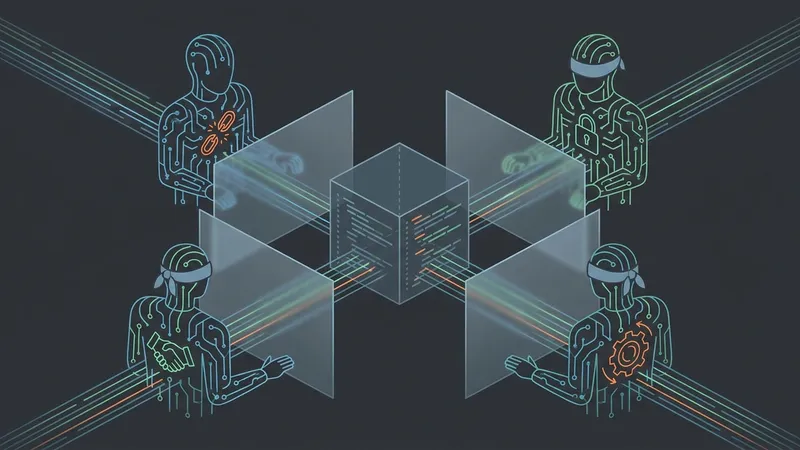
AI Berkshire is a value investing research framework compatible with Claude Code and Codex. It systematizes the methodologies of investment masters Warren Buffett, Charlie Munger, Duan Yongping, and Li Lu. The framework features 18 specialized skills covering deep research, earnings review, industry screening, and portfolio management. By running 4 parallel AI agents to challenge each other and utilizing Python-based financial verification, AI Berkshire delivers structured, unbiased, and actionable investment reports with explicit price zones rather than ambiguous analysis.
cc-safe-setup is a security utility for Claude Code that installs 8 safety hooks to ensure safe autonomous operation. It acts as a checkpoint, intercepting dangerous commands like 'rm -rf /', preventing unauthorized pushes to main branches, and catching secret leaks before execution. Specifically designed to address AI agent regressions and the Opus 4.7 safety crisis, it provides defense-in-depth through process-level hooks, including syntax validation and context window monitoring, making it an essential guardrail for AI-driven development.
A production-ready orchestration system for Claude Code, featuring 185 specialized agents, 80 focused plugins, and 153 agent skills. It utilizes a granular architecture and progressive disclosure for optimal token efficiency. The ecosystem supports complex multi-agent workflows via orchestrators like Conductor and includes a rigorous quality framework, PluginEval. It enables intelligent automation across architecture, development, and infrastructure, also extending its 153 skills to Gemini CLI users.
Open CoDesign is an open-source, local-first desktop application that serves as an alternative to Claude Design and v0. Built with Electron, it enables users to transform prompts into polished prototypes, slide decks, and web artifacts using their own AI models (Claude, GPT, Gemini, Ollama, etc.). It features an agentic workflow that plans, codes, and self-checks designs locally, offering high privacy, multi-model compatibility, and editable exports like HTML and PPTX without platform lock-in.
9Router is a specialized AI router and token saver for coding agents like OpenClaw and Claude Code. Featuring the RTK Token Saver, it auto-compresses tool results to reduce token usage by 20-40%. It implements a smart three-tier fallback system: prioritizing subscriptions, moving to cheap APIs, and finally to free models. 9Router also provides seamless protocol translation between OpenAI and Claude, multi-account round-robin, and real-time quota tracking, ensuring an uninterrupted and cost-effective AI-powered development experience.
oh-my-pi (omp) is a highly capable, open-source AI coding agent featuring deep IDE integration, built primarily in Rust. Forked from Mario Zechner's Pi, it bridges the gap between LLMs and local environments. It stands out by providing persistent Python and Bun tool-calling kernels, native Language Server Protocol (LSP) integration for exact refactoring, and real DAP debugger attachment (lldb, dlv, debugpy). Additionally, omp introduces 'Hashline' for precise edits, time-traveling stream rules for instant course-correction, and first-class subagent orchestration. Operating natively across macOS, Linux, and Windows, it serves as a comprehensive, out-of-the-box coding assistant.
Honcho by plastic-labs is an innovative open-source memory library and managed service, purpose-built for developing stateful AI agents. It offers unparalleled compatibility across models, frameworks, and architectures, enabling agents to build and persistently maintain dynamic state for users, other agents, groups, and more. As a continual learning system, Honcho intelligently adapts to evolving entities over time, significantly boosting agent retention and user trust. Its core capabilities include robust application workflow management, comprehensive interaction history storage, and advanced reasoning to guide agent behavior. With intuitive natural language querying, sophisticated session context management, and efficient message search, Honcho empowers developers to create highly intelligent chatbots and deliver deeply personalized agent experiences.
Open Multi-Agent is a lightweight, TypeScript-native multi-agent orchestration framework. By simply providing a goal, its built-in coordinator automatically decomposes the goal into a task DAG, parallelizes independent steps, and synthesizes the final output. With only 3 runtime dependencies, it seamlessly drops into any Node.js backend. Key features include mixing over 12 LLM providers within a single team, a sandboxed filesystem workspace, pluggable shared memory, and native integration with the Model Context Protocol (MCP) for tool extensibility.
PentAGI is an open-source, autonomous penetration testing AI agent platform developed by vxcontrol. Utilizing a multi-agent orchestration architecture, it automates security testing within isolated Docker sandboxes. It integrates over 20 professional security tools (e.g., nmap, Metasploit, sqlmap) and leverages Neo4j-based knowledge graphs (Graphiti) alongside pgvector for persistent semantic memory. Supporting over 10 LLM providers, PentAGI provides detailed vulnerability reports, comprehensive monitoring, and web intelligence integration.
A curated list of awesome Claude Skills, resources, and tools for customizing Claude AI workflows, particularly Claude Code.
A curated collection of official and community-built Claude Skills for document editing, coding, design, and more.