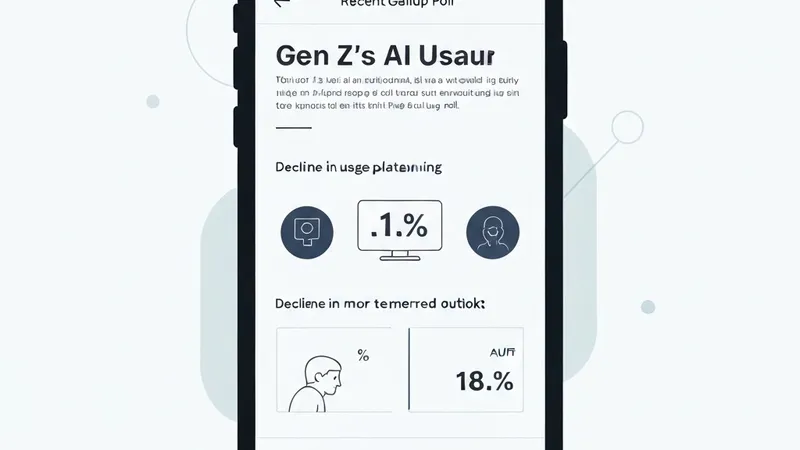
A new Gallup poll, surveying over 1,500 individuals aged 14 to 29, reveals a growing skepticism towards artificial intelligence among young people, even daily users. While AI usage among Gen Z has not declined, it has also not increased since the last poll in 2025, indicating a plateau. This stagnation is accompanied by rising concerns about the technology's consequences. The findings are significant because Gen Z is "the generation most likely to enter or grow within the workforce over the next decade," implying their adoption patterns will influence broader societal AI integration. The AI sector is currently anticipating a massive surge in demand, with leading tech and financial firms investing billions to scale supply. Experts warn that if short-term demand fails to meet expectations precisely, it could lead to severe economic repercussions.
The report states, "The data paint a picture of a generation that is neither wholly rejecting AI nor fully embracing it — including those who use it every day." It adds, "This signals a growing credibility challenge that access alone will not solve." Curiosity remains the most common emotion felt by Gen Z regarding AI, but it is closely followed by anxiety and anger. Excitement and hope were the lowest-ranked responses. Since 2025, excitement for AI has dropped by 14 percentage points, and hopefulness by nine points, while anger increased by nine points, and anxiety remained stable.
Anxiety appears to be widespread, irrespective of AI usage. The poll indicates that 4 out of 10 Gen Zers are anxious about the broader consequences of AI adoption. Among non-users, 60% reported anxiety, with only 2% expressing hope. For daily AI users, 28% still reported anxiety, while 38% felt hopeful.
This shift in sentiment is not without reason. As AI use expanded, so did reports of its adverse impacts on areas such as mental health, warfare, governance, the job market, and the environment. This has led to an increasing aversion to AI as a concept and greater dissent against the unprecedented data center buildout required to support it. Gen Z has been particularly affected. Over the past year, headlines have featured cases of vulnerable teens allegedly guided by AI chatbots to self-harm. Simultaneously, studies have linked corporate AI initiatives to a more hostile job market for young graduates, as AI is proficient at automating tasks typically assigned to early-career workers, potentially leading to reduced hiring. Earlier this year, the Irish government reported a correlation between slowing youth employment and AI adoption, and last year, Fed Chair Jerome Powell acknowledged that AI is likely to...