With AI image generators widely available online and more sophisticated than ever, it has never been harder to tell if an image is authentic. On Tuesday, OpenAI announced two new measures to help fight this growing problem.
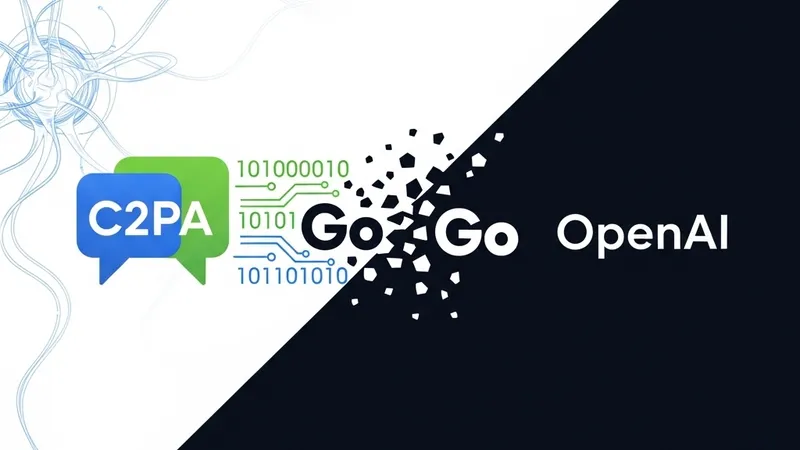
The company has committed to an open standard called C2PA, which adds a clear signal in metadata indicating that an image was generated by AI. Additionally, OpenAI is partnering with Google to integrate an invisible watermark called SynthID, which is designed to be harder to detect and highly resistant to erasure by bad actors trying to cover their tracks.
These new protections only apply to images generated by OpenAI products, meaning they will not affect the flood of imagery coming from less reputable AI tools. However, they can help ensure that OpenAI itself is not contributing to the issue.
OpenAI is also previewing a public verification tool that will check for both signals, allowing users to easily test whether an image was generated using AI. Initially, the tool will only verify images generated by OpenAI products, but the company hopes to expand its scope to cover other generation tools over time.
Founded in 2021, the Coalition for Content Provenance and Authenticity (C2PA) is a non-profit dedicated to mitigating the harmful effects of AI imagery on public discourse. While the C2PA standard has been adopted by a range of Google products, its adoption remains inconsistent across the tech industry. Because the C2PA signal resides in the metadata of each file, it can be manipulated, making it most useful among trusted platforms and users.
SynthID represents a newer, more robust effort designed to resist tampering. Developed by Google, the SynthID watermark is engineered to persist even when bad actors attempt to remove it through screenshots, resizing, or other digital manipulations.
The two systems are meant to complement each other, addressing their respective weaknesses. “Watermarking can be more durable through transformations like screenshots, while metadata can provide more information than a watermark alone,” OpenAI noted in its announcement. “Together, they make provenance more resilient than either layer would be on its own.”
[AgentUpdate Depth Analysis] As AI Agents transition to a multimodal, autonomous era, they are becoming massive producers and consumers of synthetic media. OpenAI’s dual-track approach—combining C2PA metadata with Google’s SynthID watermarking—is not just about fighting deepfakes; it is a vital step toward building a trustworthy machine-to-machine ecosystem. In future Agent-to-Agent interactions, verifiable provenance is crucial to prevent "hallucination feedback loops" where models recursively train on synthetic data. C2PA metadata offers structured, machine-readable provenance for rapid agent-level filtering, while SynthID provides a resilient line of defense against adversarial manipulation. Together, this dual-layered architecture establishes a machine-readable protocol for digital trust, enabling future agents to verify, synthesize, and distribute information responsibly across the web.