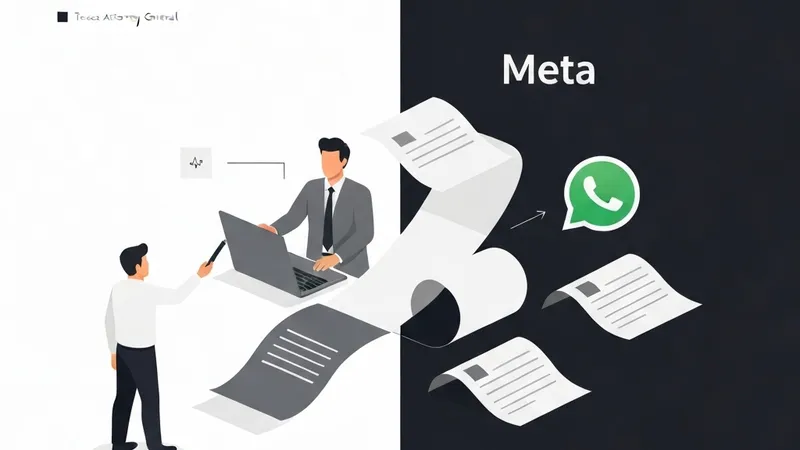
The Texas Attorney General's office has filed a lawsuit against Meta Platforms Inc. and its messaging subsidiary WhatsApp, alleging the tech giant misled consumers regarding the strength and scope of WhatsApp’s encryption protocols. A spokesperson for Meta has denied these allegations.
The lawsuit, filed in Harrison County court, asserts that despite WhatsApp and Meta's assurances to users that their messages are fully secured, the companies actually retain access to "nearly all" private communications on the instant messaging application.
"WhatsApp promotes its service as secure and encrypted, but has failed to deliver on those promises," Texas Attorney General Ken Paxton said in a statement. This legal action highlights growing regulatory scrutiny over the authenticity of "end-to-end encryption" claims by major tech platforms, potentially altering the landscape of digital privacy standards globally.
[AgentUpdate Depth Analysis] The Texas lawsuit against Meta exposes a critical vulnerability at the intersection of data privacy and the evolving AI Agent ecosystem: the "trust boundary." As AI Agents transition from simple assistants to "digital doubles" capable of handling highly sensitive personal and financial data, the absolute security of their underlying communication channels is paramount. If end-to-end encryption protocols are compromised or accessible to host platforms, decentralized or edge-based AI Agents operating on these networks will face severe privacy risks. This case underscores the urgent need for the AI Agent ecosystem to accelerate its shift toward on-device AI and Trusted Execution Environments (TEEs). To achieve true autonomy, next-generation Agents must rely on hardware-level isolation and decentralized protocols, rather than trusting the promises of centralized tech giants.